Dishwasher Repair in Orange County
Dishwashers fail quietly. Performance drops over months, and by the time the machine is described as broken it has usually been running with a packed filter and half-blocked spray arms for a long time. Most of the calls we take are cleaning and a single part, not a new machine.
Dishes coming out gritty
Wash performance depends on water reaching the load at pressure, and there are only a few places it goes wrong. The filter and the chopper area pack with debris, which starves the pump. The spray arm holes block with scale and food, so whole sections of the rack get missed, and an arm that will not spin freely by hand is telling you that directly. Beyond that, the wash pump can lose an impeller vane, and the diverter valve that alternates upper and lower arms can stick. Overloading and blocked arms explain far more of these calls than failed pumps.
Standing water in the bottom
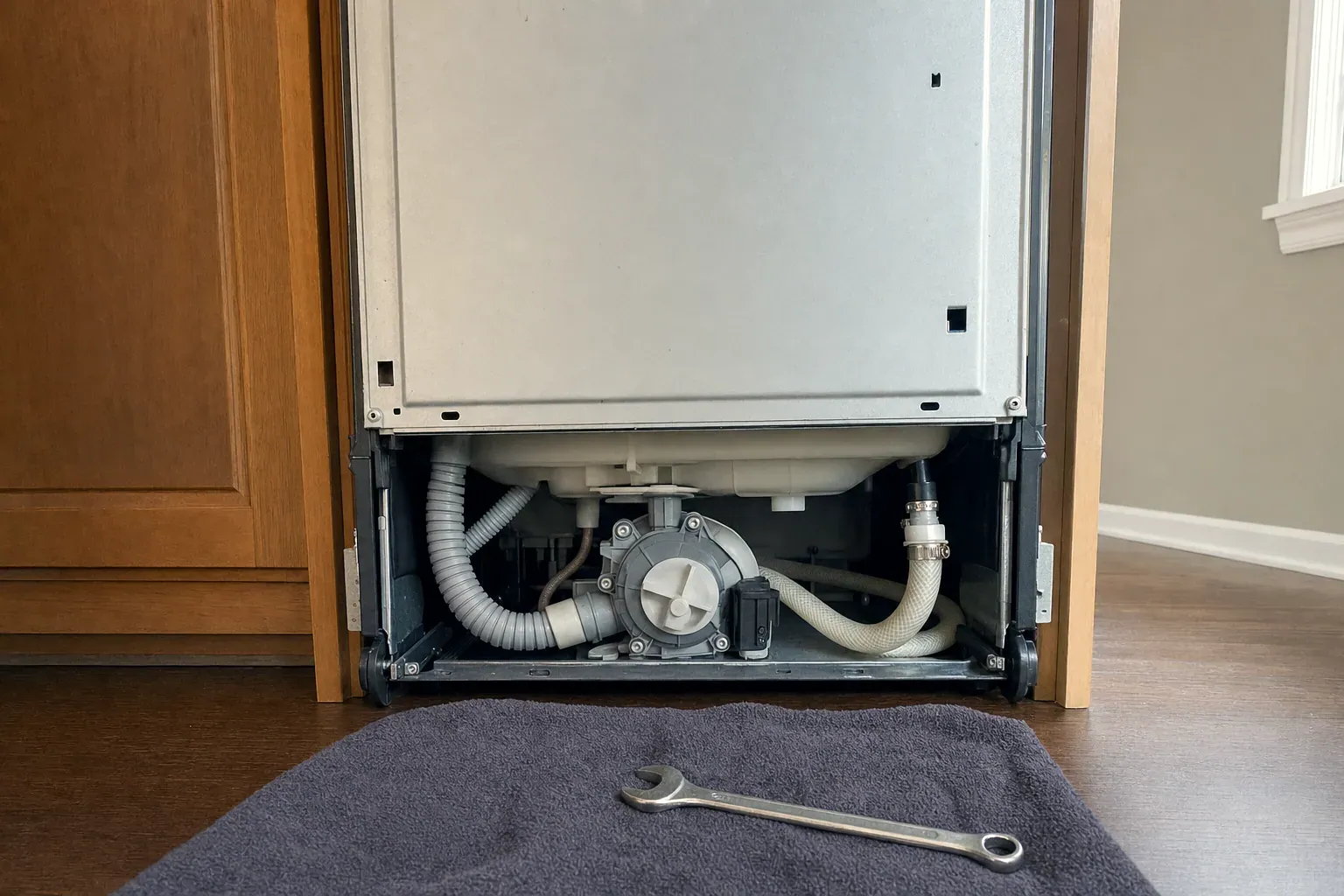
Water left in the sump means the drain path did not complete, and on many installations the fault is outside the machine. The drain hose runs to a disposal or an air gap, and both block. On a new disposal, the knockout plug is sometimes left in place, which prevents the dishwasher draining at all from day one. Inside the machine, the drain pump can seize or run with a jammed impeller, and the check valve can stick open and let water fall back. A small amount of water in the sump between cycles is normal and by design.
Symptoms we are called about
- dishes still gritty at the end of a cycle
- standing water in the sump
- leak at the bottom of the door
- will not latch or will not start
- detergent cup still full afterwards
What usually fails, and how you tell
| Fault | How it shows | What the repair involves |
|---|---|---|
| Blocked filter and chopper area | Grit on the dishes, a gradual decline over months, and visible debris in the sump. Sometimes a grinding noise as the pump tries to move water past a packed filter. | Strip and clean the filter, the sump and the chopper, then set a cleaning interval. This is the most common dishwasher fault on this list. |
| Blocked or seized spray arms | Whole sections of the rack come out untouched, usually the top. The arm does not spin freely when you turn it by hand, and the holes show white scale. | Clear the arm holes and the feed tube, descale where needed, and replace an arm whose bearing has worn enough to let it drag. |
| Drain pump or blocked drain path | Standing water at the end of the cycle. If the pump is heard running with nothing moving, the blockage is downstream at the air gap, the disposal inlet or the hose. | Clear the drain path first, including the disposal knockout plug on new installations, then replace the pump if it is seized or the impeller is damaged. |
| Door gasket or lower door seal | Water on the floor directly in front of the machine, worst during the wash phase, with a dry cabinet base underneath. The gasket feels hard and no longer springs back. | Replace the gasket or lower seal and check the machine is level. A machine tipped forward will leak past a perfectly good seal. |
| Door latch and switch | The machine will not start, or stops the moment the door is nudged. Some models flash the cycle lights instead of giving a code. | Replace the latch assembly and check the door alignment. Doors that have been leaned on drop enough to miss the striker. |
| Detergent dispenser wax motor | The detergent cup is still full and closed at the end of the cycle, or open with the tablet undissolved on the door. Wash performance is otherwise fine. | Replace the wax motor or the dispenser assembly, and check nothing in the top rack is blocking the flap from opening. |
| Water inlet valve or screen | The cycle runs with little or no water, times out, or takes far longer than usual. Often a hammer noise from the valve as it closes. | Clean the inlet screen and check the supply tap, then replace the valve if the coil is open or it will not seat. |
Leaks, and where they actually start
A puddle in front of the machine is usually the door: either the gasket has hardened and stopped sealing, or the lower door seal has been damaged, or the machine is sitting out of level so water runs to one corner. A leak that appears only during the wash phase is more likely the pump seal or a split hose, and it shows itself under the cabinet rather than at the door. Detergent that foams excessively, usually washing-up liquid used by mistake, will push water out of a perfectly good door seal.
Will not start, will not fill, will not dry
A machine that will not start is normally the door latch and its switch rather than the control, since the board will not run with the door unconfirmed. No fill at all points at the inlet valve, its screen, or the supply tap under the sink. Poor drying on a condensing dishwasher is usually rinse aid, not a heater, because those machines rely on the load coming out hot and shedding water. Where the machine does have a heating element, an open element gives cool water as well as wet dishes.
Dishwasher by town
- Dishwasher in Huntington BeachBeach Cities
- Dishwasher in Laguna NiguelSouth County
- Dishwasher in AnaheimNorth County
- Dishwasher in Mission ViejoSouth County
- Dishwasher in IrvineCentral County
- Dishwasher in Newport BeachBeach Cities
- Dishwasher in TustinCentral County
- Dishwasher in FullertonNorth County
- Dishwasher in Lake ForestSouth County
- Dishwasher in Santa AnaCentral County
- Dishwasher in Costa MesaCentral County
- Dishwasher in PlacentiaNorth County