Ice Maker Repair in Orange County
Two quite different machines get called an ice maker. One is the module bolted into a freezer, driven by the freezer temperature and a simple timer. The other is a standalone undercounter machine with its own sealed system, drain and pump. They share a water supply and almost nothing else, so the first thing to establish is which one you have.
In-freezer modules and standalone machines
A freezer module makes ice only when the freezer is cold enough to trip its thermostat, so a slow module is very often a freezer problem rather than an ice maker problem. Check the freezer temperature before touching the module. A standalone undercounter machine runs its own refrigeration on a cycle timer, drains to waste or through a pump, and needs airflow at the grille the same way a wine cabinet does. It also needs cleaning on a schedule, which is where most of them fall over in hard-water areas.
Water supply, valves and the fill tube
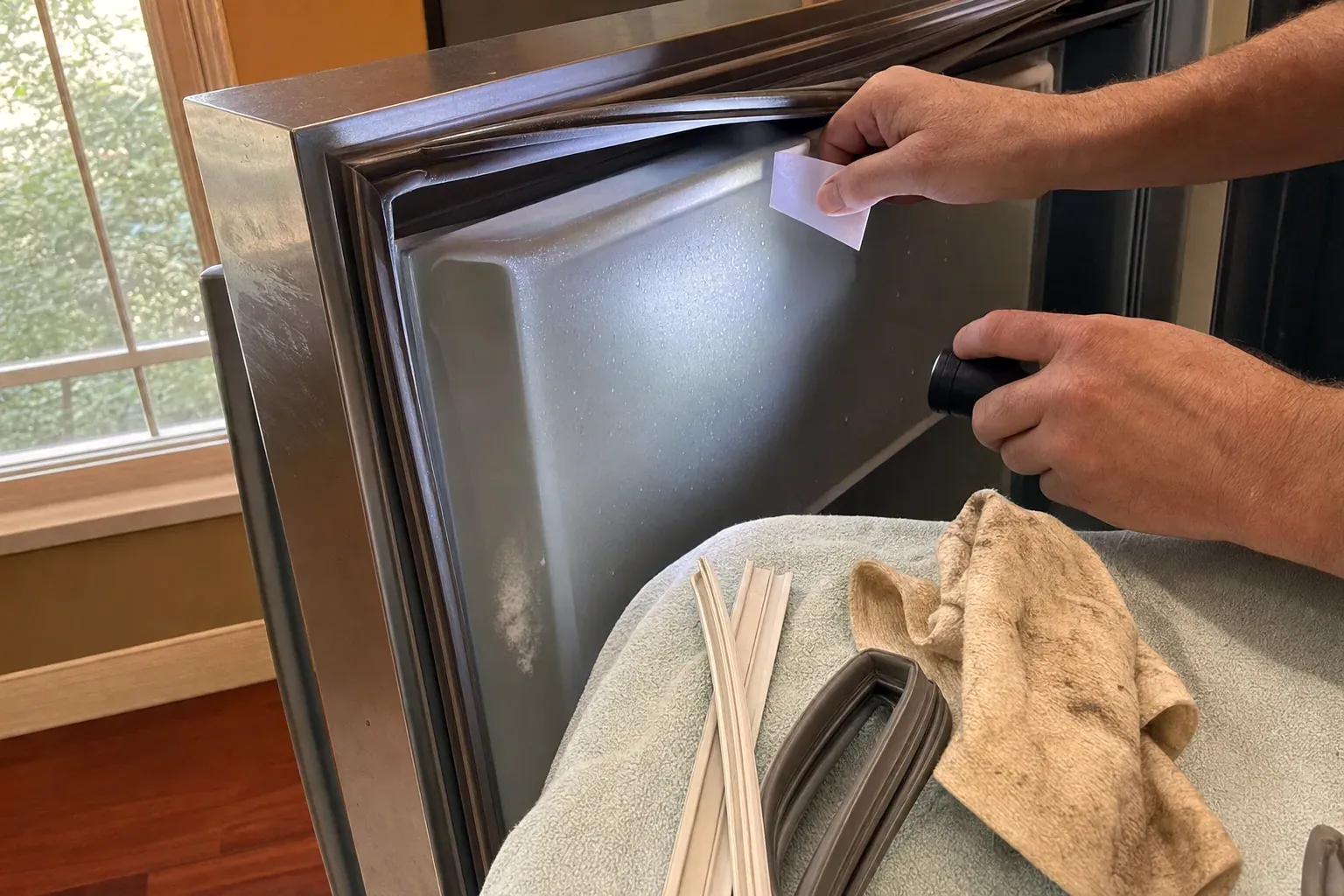
Most no-ice calls end at the water side. The inlet valve is a solenoid that can stick or fail open-circuit; a filter left in past its life restricts flow enough that the mould only part-fills; and a saddle valve on old plumbing can silt up. The fill tube itself freezes when the fill is slow, and once ice bridges the tube, every later fill runs down the outside of the machine and onto the floor. That is why a no-ice fault and a leak so often turn up on the same visit.
Symptoms we are called about
- no ice at all for several days
- hollow or cloudy cubes
- cubes fused into one block
- water pooling under the unit
- harvest arm stuck mid-cycle
What usually fails, and how you tell
| Fault | How it shows | What the repair involves |
|---|---|---|
| Water inlet valve failure | No ice and no sound of water filling. Sometimes the opposite: the valve weeps past its seat, the mould overfills, and cubes fuse across the tray with ice creeping up the fill tube. | Test the solenoid coil and the screen behind it, then replace the valve. A weeping valve also needs the supply pressure checked. |
| Frozen fill tube | A plug of ice in the tube feeding the mould, water on the floor under the freezer, and a thin sheet of ice on the shelf below the maker. Ice production stops or becomes intermittent. | Clear the tube, then find why the fill was slow, normally a restricted filter, a partly closed supply or a weak valve. Clearing the ice without that is a repeat visit. |
| Ejector module or gear train | Cubes made but never swept out, an arm stopped part way through its sweep, or a grinding sound from the module once a cycle. The tray refills over the top of the last batch. | Replace the module. The gears are moulded into it on most designs, so the module is the part rather than the individual gear. |
| Mould heater or hot-gas harvest valve | A solid block of ice where the cubes should separate. On standalone machines a full sheet stays welded to the evaporator plate and the machine keeps cycling without dropping anything. | Test the heater circuit or the harvest valve and replace the failed one, then run a full cycle to confirm the release. |
| Restricted water filter or supply | Hollow, small or half-formed cubes with everything else running normally. Fill takes noticeably longer than it used to, and production drops off gradually rather than stopping. | Replace the filter and confirm the supply pressure at the valve. This is the cheapest fix on this page and the most commonly missed. |
| Scale on the evaporator plate | Cloudy cubes, then thin cubes, then a machine that runs long cycles and produces very little. Visible white deposits on the plate and in the sump. | Descale the water path with the correct cleaner, replace the filter, and set a cleaning interval. Scale left in place eventually takes the pump and float with it. |
| Drain or drain pump fault on a standalone machine | Water pooling under the cabinet, or a sump that stays full between cycles. Ice quality falls off because the machine is recirculating dirty water. | Clear the drain line, service or replace the pump, and check the fall on the run. Undercounter machines are unforgiving about a drain line that has been kinked behind the cabinet. |
Harvest, the ejector and cubes that fuse
Cubes fused into a single block mean the harvest is not clearing. On a module, the mould heater warms the tray just enough to release the cubes while the ejector arm sweeps them out; if the heater is open-circuit, or the ejector gears have stripped, the cubes stay put and the next fill freezes on top of them. On a standalone machine with an evaporator plate, the same job is done by a hot-gas valve, and a valve that will not open leaves a sheet of ice welded to the plate. The noise the machine makes during harvest usually tells you which.
Scale, cleaning and water quality
Orange County water is hard, and scale is the quiet killer of standalone machines. It builds on the evaporator plate, insulates it, and slowly produces cloudy cubes, then short cycles, then nothing at all. Cloudy or hollow cubes with everything else working is a descale and filter job, not a parts job. Left long enough, the same scale reaches the pump and the float, and the machine starts reporting faults that look electrical. A machine cleaned on the schedule in its manual mostly avoids this entire section.
Ice Maker by town
- Ice Maker in Huntington BeachBeach Cities
- Ice Maker in Laguna NiguelSouth County
- Ice Maker in AnaheimNorth County
- Ice Maker in Mission ViejoSouth County
- Ice Maker in IrvineCentral County
- Ice Maker in Newport BeachBeach Cities
- Ice Maker in TustinCentral County
- Ice Maker in FullertonNorth County
- Ice Maker in Lake ForestSouth County
- Ice Maker in Santa AnaCentral County
- Ice Maker in Costa MesaCentral County
- Ice Maker in PlacentiaNorth County