Refrigerator Repair in Orange County
Refrigerator faults are easier to read than they look, because the compartment that fails tells you which part of the system to open. Almost everything on a domestic refrigerator is cooled by one evaporator and moved around by one fan, so a warm fridge with a cold freezer is an airflow story rather than a refrigerant story.
Warm fridge, cold freezer
This is the most common call on this page, and it is rarely the compressor. In most designs one evaporator sits in the freezer and a fan pushes cold air forward into the fresh food compartment. If that fan has failed, or if frost has built up over the evaporator and blocked the airflow, the freezer stays acceptable while the fridge slowly climbs. The clue is noise: open the freezer with the door switch held and listen for the fan. On models with an air damper, a damper stuck shut gives exactly the same symptom with a perfectly healthy fan.
Frost, defrost and the drain
A frost-free refrigerator melts the frost off its evaporator several times a day using a heater, a bimetal or sensor, and a timer or board to run them. When any of the three fails, ice sheets across the evaporator, the airflow chokes, and within a week or two the fridge is warm. The meltwater then leaves through a drain tube; when that tube freezes, water backs up and appears in the crispers or under the bottom drawer. Clearing the drain and fitting the correct clip or heater is a standard job and it prevents the leak recurring.
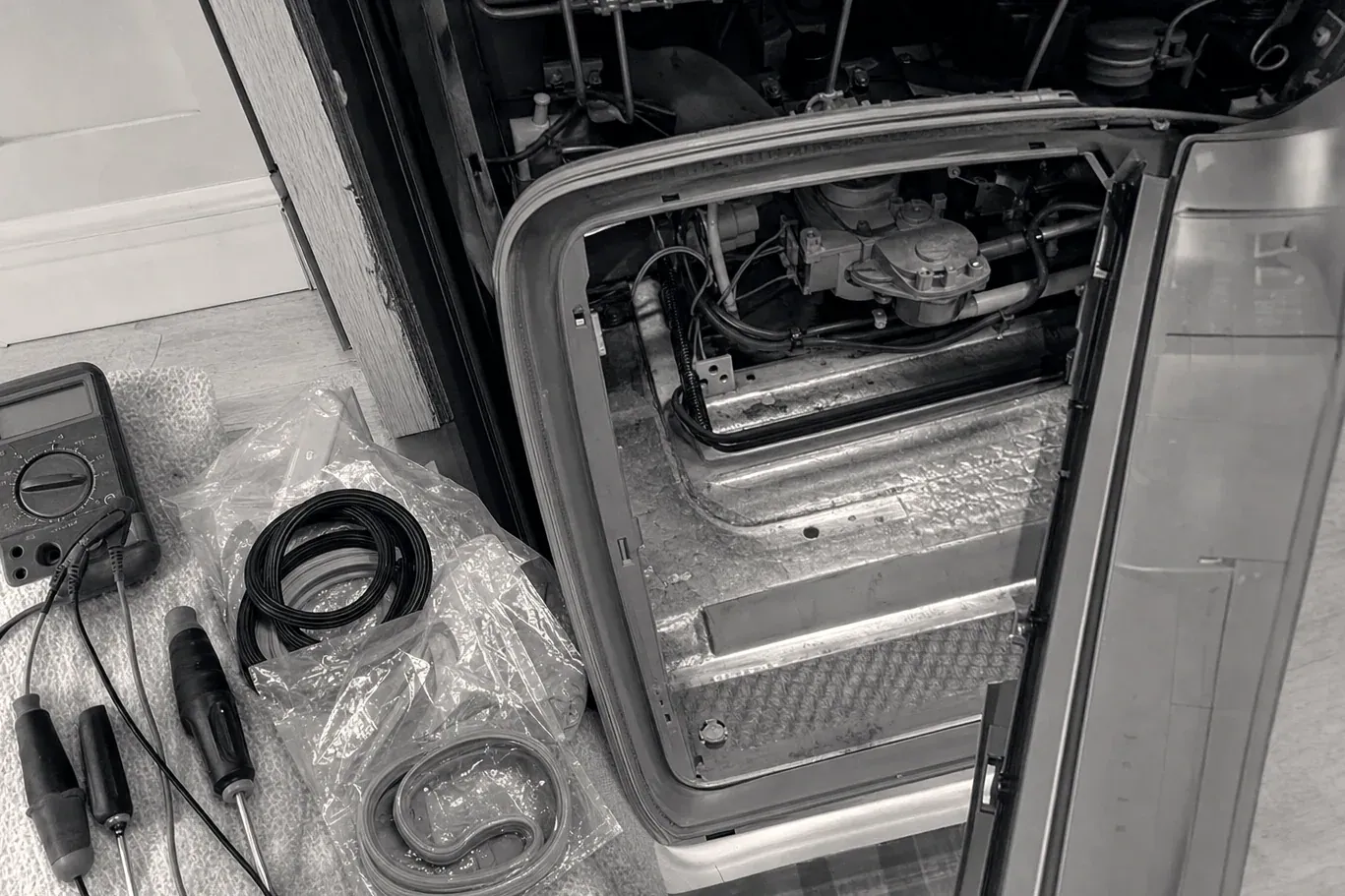
Symptoms we are called about
- fresh food section warming while the freezer is fine
- frost sheeting the back wall
- compressor running without cycling
- water pooling in the crisper
- fan noise that rises and falls
What usually fails, and how you tell
| Fault | How it shows | What the repair involves |
|---|---|---|
| Evaporator fan motor | Fresh food section warming while the freezer holds, and no fan noise from the freezer with the door switch pressed in. Sometimes a chirp or a rising and falling whine before it fails outright. | Replace the fan motor and check the blade has not been fouled by ice or a package pushed against the rear panel. |
| Defrost system failure | Frost sheeting the back wall of the freezer or a solid ice block over the evaporator, with the fridge warming over a week or two. Removing the ice restores cooling for a few days and then it returns. | Test the heater, the bimetal or sensor and the control, replace the failed component, and clear the ice fully before closing up. |
| Frozen defrost drain | Water pooling in the crispers or under the bottom drawer, sometimes a sheet of ice under the freezer floor. Cooling is otherwise normal. | Clear the drain tube and fit the correct drain clip or heater where the model uses one. Without it the tube refreezes within a couple of months. |
| Dirty condenser or failed condenser fan | A compressor that runs without ever cycling off, a hot compartment at the back or underneath, and temperatures that are slightly high everywhere rather than in one compartment. | Clean the coils properly and replace the condenser fan if it is seized or noisy. Worth doing annually on any unit in a garage. |
| Air damper stuck shut | A warm fresh food section with a fan that is clearly running and an evaporator that is clean and frost free. Freezer temperature is normal or slightly low. | Free or replace the damper assembly and test the control that drives it. Easily mistaken for a fan fault, which is why the fan gets confirmed first. |
| Start relay or compressor start components | A click every few minutes, no cooling in either compartment, and a compressor that is warm and silent. Occasionally it starts on the third attempt and then runs normally. | Test and replace the start relay and overload, then verify the compressor draws normal current before condemning anything larger. |
| Door gasket set | Condensation on the cabinet face, frost forming near one corner inside, and a unit that runs far more than it used to. A strip of paper pulls free at the failing point. | Replace the gasket and correct the door alignment or the levelling, since a door that hangs low will not seal on a new gasket either. |
Running constantly and never cycling
Start with the condenser. Coils packed with dust and pet hair, or a condenser fan that has stopped, mean the system cannot reject heat, so it runs and runs without reaching temperature. Inland Orange County summers make this worse, and garage refrigerators suffer most of all. After that, check the door seals, because a seal that no longer pulls square lets warm air in continuously. Only when airflow, coils, fan and seals are all confirmed good does the conversation move to the sealed system, which is a different order of repair.
Freestanding units and what we do here
This site handles general refrigerator work: freestanding and side-by-side units, top and bottom freezers, and the everyday faults on built-in equipment. That means fans, defrost systems, thermistors, boards, dampers, drains, seals and start components. Where a job is really a full built-in column rebuild, we will say so plainly rather than take it on halfway. The diagnosis is the same either way, and you get a straight answer on the visit about what the unit needs and whether it is worth doing.
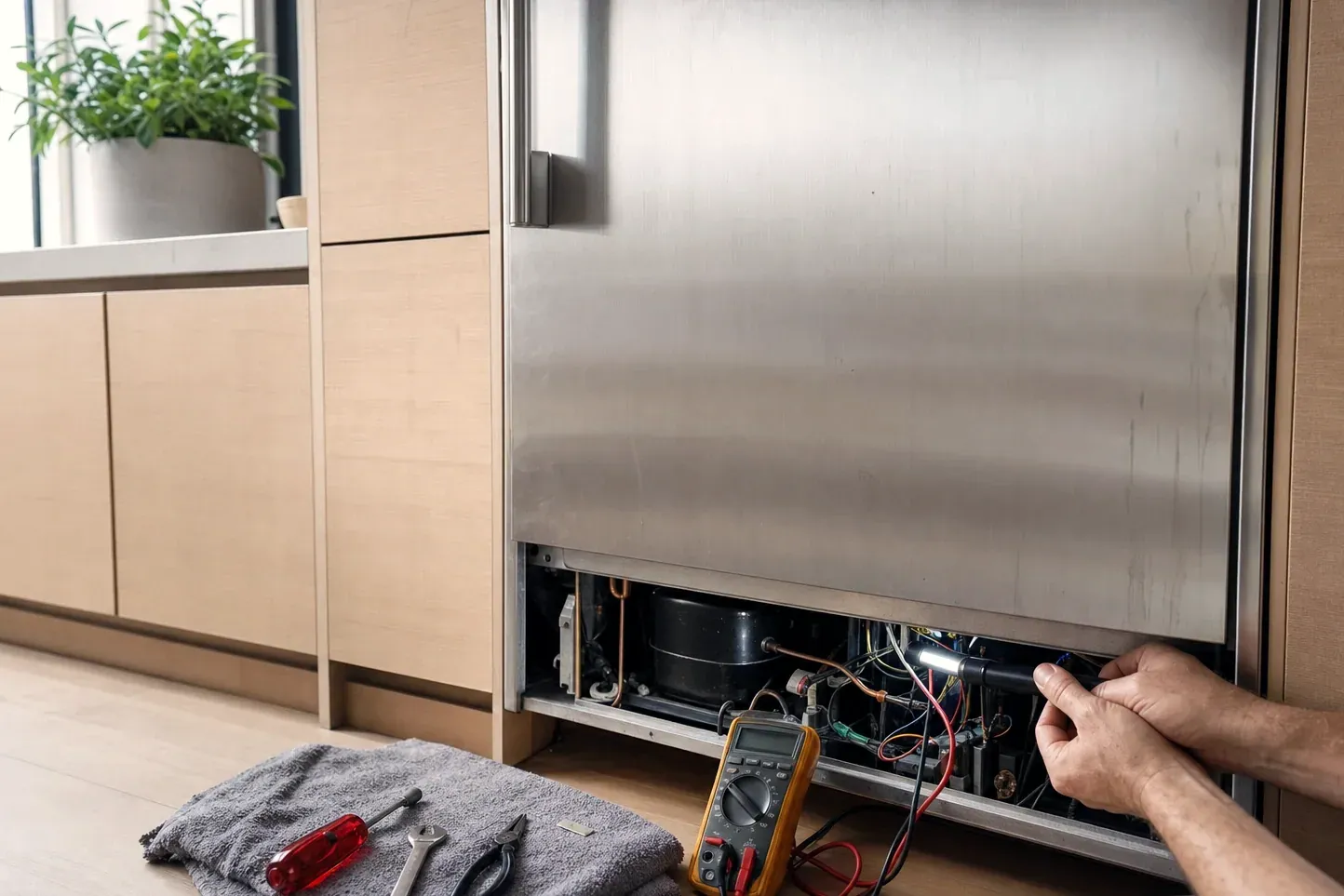
Refrigerator by town
- Refrigerator in Huntington BeachBeach Cities
- Refrigerator in Laguna NiguelSouth County
- Refrigerator in AnaheimNorth County
- Refrigerator in Mission ViejoSouth County
- Refrigerator in IrvineCentral County
- Refrigerator in Newport BeachBeach Cities
- Refrigerator in TustinCentral County
- Refrigerator in FullertonNorth County
- Refrigerator in Lake ForestSouth County
- Refrigerator in Santa AnaCentral County
- Refrigerator in Costa MesaCentral County
- Refrigerator in PlacentiaNorth County