How Long Thermador Ovens Last and What Wears Out First
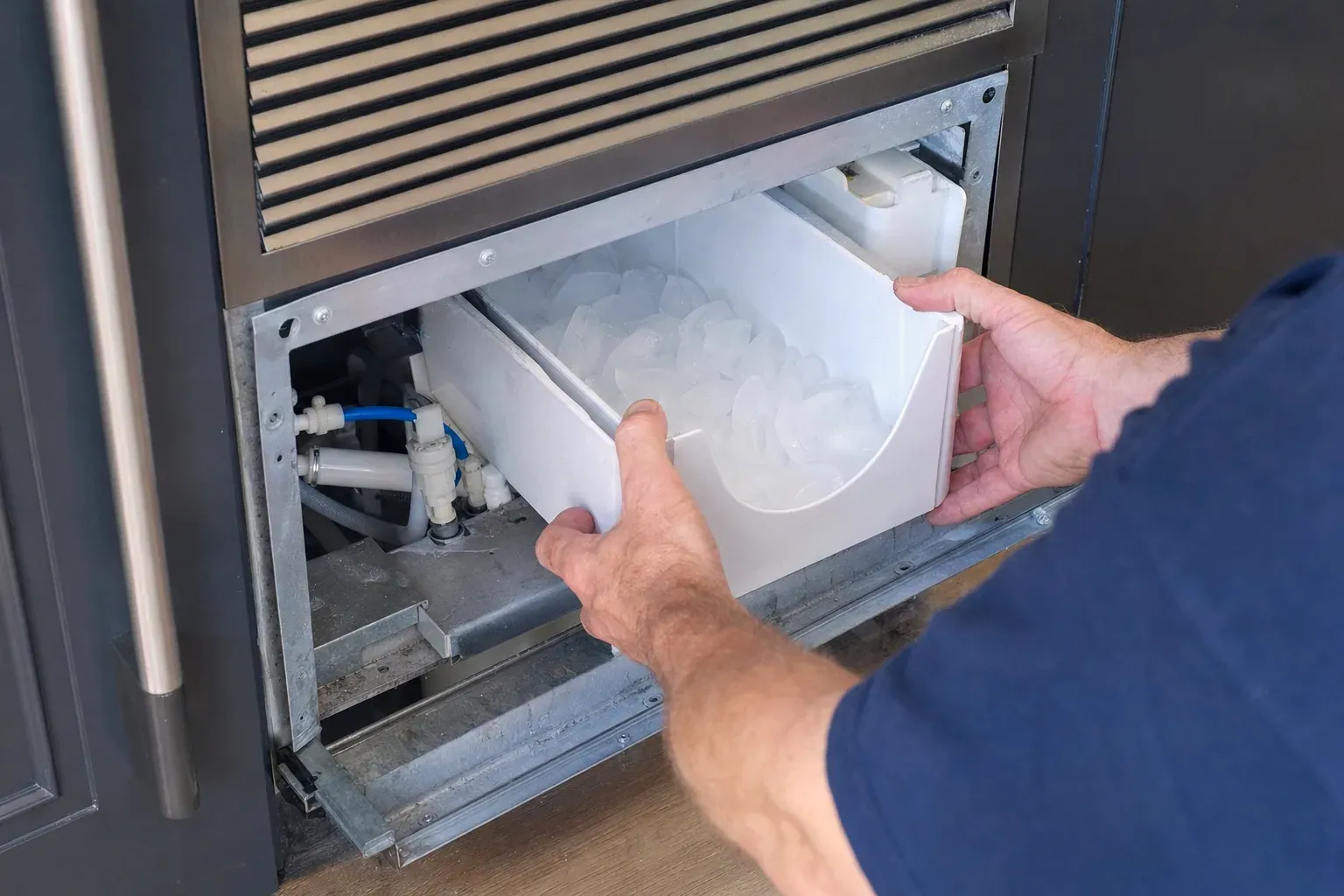
A Thermador oven typically lasts about 13 to 15 years, and one that is cleaned gently and repaired as its parts wear can run well beyond that. The steel cavity, frame and door of a built-in oven are made to outlast the heating parts and electronics inside them, so age usually arrives as a series of small failures rather than one sudden end. That matters most for a wall oven set into custom cabinetry, as so many are in kitchens from Irvine to Newport Beach, because replacing it means matching a cutout as well as buying a new appliance.
What a realistic lifespan looks like
The 13 to 15 year figure is a general range for built-in and range ovens across the industry, not a number Thermador prints. The maker's own commitment is a 2-year limited warranty covering the whole appliance, parts and labor; after that, the life of the oven depends on how hard it works and how it is looked after. A household that bakes every day and runs self-clean monthly will wear an oven out faster than one that roasts on the weekend.
Thermador builds its wall ovens in two looks, Masterpiece with contemporary handles and Professional with bold handles and rotating knobs, and both age in the same basic way. Feature-rich models add more to maintain: 30-inch single ovens such as the POD301W and MED301WS offer 16 cooking modes, a rotisserie and three telescopic racks, and each of those features relies on a motor, relay or sensor that may one day need replacing.
The parts that usually wear out first
Most service calls on an older Thermador oven involve the same short list of components. None of them means the oven is finished; each is a normal wear item with a known replacement.
- Bake and broil elements, which blister, crack or stop glowing after years of heating and cooling.
- The convection fan motor and the element behind it, which can turn noisy or stop moving air, leaving bakes uneven.
- Oven igniters on all-gas ranges, which weaken slowly until the oven takes longer to light or refuses entirely.
- Surface burner igniters, which are fragile ceramic and crack easily if scraped during cleaning.
- The door lock motor and switch, worked hard by every self-clean cycle.
- The temperature sensor and the electronic control board, which age with heat and cause drifting temperatures or coded faults.
- Door gaskets and hinges, which loosen and let heat escape around the edge.
Thermador's care advice for range igniters is gentle by design: clean them with a cotton swab moistened in soapy water, keep sharp tools well away, and when a burner will not light, look first at whether its cap is sitting properly on the base. That last check costs nothing and is worth doing before anyone orders an igniter.
Habits that shorten or stretch an oven's life
Self-cleaning is the largest single source of wear. On Thermador's Professional range ovens the cycle lasts 2 hours, locks the door and turns off the surface elements and low-simmer burners while it runs, and the oven will refuse another self-clean for 24 hours afterward. Heat at that level cooks the door lock, the wiring and the control electronics along with the grime, so wiping spills by hand and saving the cycle for heavy buildup protects those parts.
Aluminum foil is another habit worth dropping. The Consumer Product Safety Commission warns against covering the bottom of a natural gas or propane oven with foil, because it blocks the air the burner needs for combustion and can lead to carbon monoxide. In an electric oven, foil traps heat against the floor and can damage the enamel, so a baking sheet on a low rack is the better way to catch drips.
Stainless trim stays sound longer when it is cleaned the way Thermador suggests: wipe with the grain, use a stainless conditioner such as part 00576697, and avoid any cleanser containing chlorine or chlorine compounds, since those corrode stainless steel.
Steam ovens carry one extra risk that is very local. Much of Orange County's tap water is hard, and its minerals settle inside the steam system over time. For the Masterpiece steam ovens MEDS301WS and MEDS302WS, Thermador lists water hardness test strips 00056317, descaler powder 00573828 and descaler liquid 10008170. Its descaling program takes roughly 70 to 90 minutes and uses 3½ cups (800 ml) of water plus 200 ml of descaler. Letting scale collect in the pump and lines is one of the most avoidable ways to cut a steam oven's life short.
Signs that age is the real problem
A single failed element in a ten-year-old oven is simply a repair. The picture changes when several of the following turn up together:
- A second or third major part failing within a year or so of the last one.
- Rust or chipped enamel inside the cavity, or fog trapped between the panes of the door glass.
- Temperatures that remain off even after the calibration has been adjusted.
- Error codes that come straight back after every reset.
- A control board or display that is no longer available as a replacement part.
- A door that no longer closes squarely, letting heat pour out around the frame.
Calibration makes a useful test. Thermador range ovens with a display accept a temperature offset anywhere from -35°F to +35°F in the basic settings, and the maker cautions that ordinary home oven thermometers fluctuate too much to be trusted for this. If an accurate reading still shows the oven running off after the full adjustment, the sensor or control is aging, and on an older unit that can be the tipping point.
Checks worth doing before you call
A few simple steps will often show whether the oven is truly failing or only needs a reset.
- When an E and a number appear and the oven beeps, press TIMERS or any key to stop the beeping, reset the oven if necessary and write the code down; a code that keeps returning needs a service visit.
- If the door stays locked after the oven has cooled, switch it off at the circuit breaker, wait five minutes and turn the power back on so the oven can reset itself.
- Open the door and look at the rating plate on the left side of the door trim. On Masterpiece ovens it shows the model number (E-Nr.) and the production number (FD), which tell a technician exactly which parts fit and help pin down how old the oven is.
- On a gas range, confirm every burner cap is seated flat before assuming an igniter has died.
Getting an older Thermador looked at
When those checks leave the fault in place, the next step is a phone call to (949) 979-4880, or the booking button here if you prefer to schedule online. A visit starts with an $89 service call. Have the E-Nr. and FD numbers ready, mention any codes you wrote down, and say roughly how often the oven runs self-clean; those details help separate one worn part from an oven nearing the end of its useful life. OC Appliance Repair Co is an independent service that is not affiliated with Thermador, and we work in homes across Orange County, from Huntington Beach and Laguna Beach to Tustin and Mission Viejo.
What you can check yourself
- Find the E-Nr. and FD numbers on the left side of the door trim
- Write down any E code before you clear it
- Make sure every burner cap sits flat on its base
- Keep aluminum foil off the floor of a gas oven
- Test steam oven water with hardness strips
Questions
- Is a 15-year-old Thermador oven worth repairing?
- Often it is, provided the cavity, door and controls are still sound and the fault is one wearing part such as an element, an igniter or a sensor. The case weakens when the enamel is rusting, the control board is no longer stocked, or this is the third big failure in a short stretch.
- Does self-cleaning shorten the life of a Thermador oven?
- It adds wear, mainly to the door lock, the wiring and the electronics, because the cycle holds extreme heat for a long time. Wiping spills by hand and keeping self-clean for heavy buildup is an easy way to spare those parts without giving up a clean oven.
- How long is the Thermador warranty on an oven?
- Thermador lists a 2-year limited warranty on its ovens that covers the entire appliance, both parts and labor. Once that period ends, repairs are paid by the owner, so it is worth keeping the purchase record and the model details somewhere easy to find.
- Why is my Thermador oven door still locked after it cooled down?
- The control has usually held the lock after a cycle and needs a reset. Thermador's own fix is to turn the oven off at the circuit breaker, wait five minutes and switch it back on. If the door still will not release, the lock motor or switch may have worn out.
- Can I check my oven temperature with a store-bought thermometer?
- Thermador advises against judging its ovens that way, because home oven thermometers swing up and down while the oven cycles. Display models allow a temperature offset of -35°F to +35°F, but a technician should confirm the oven is truly off before you change it.