When to Repair an Appliance and When to Replace It
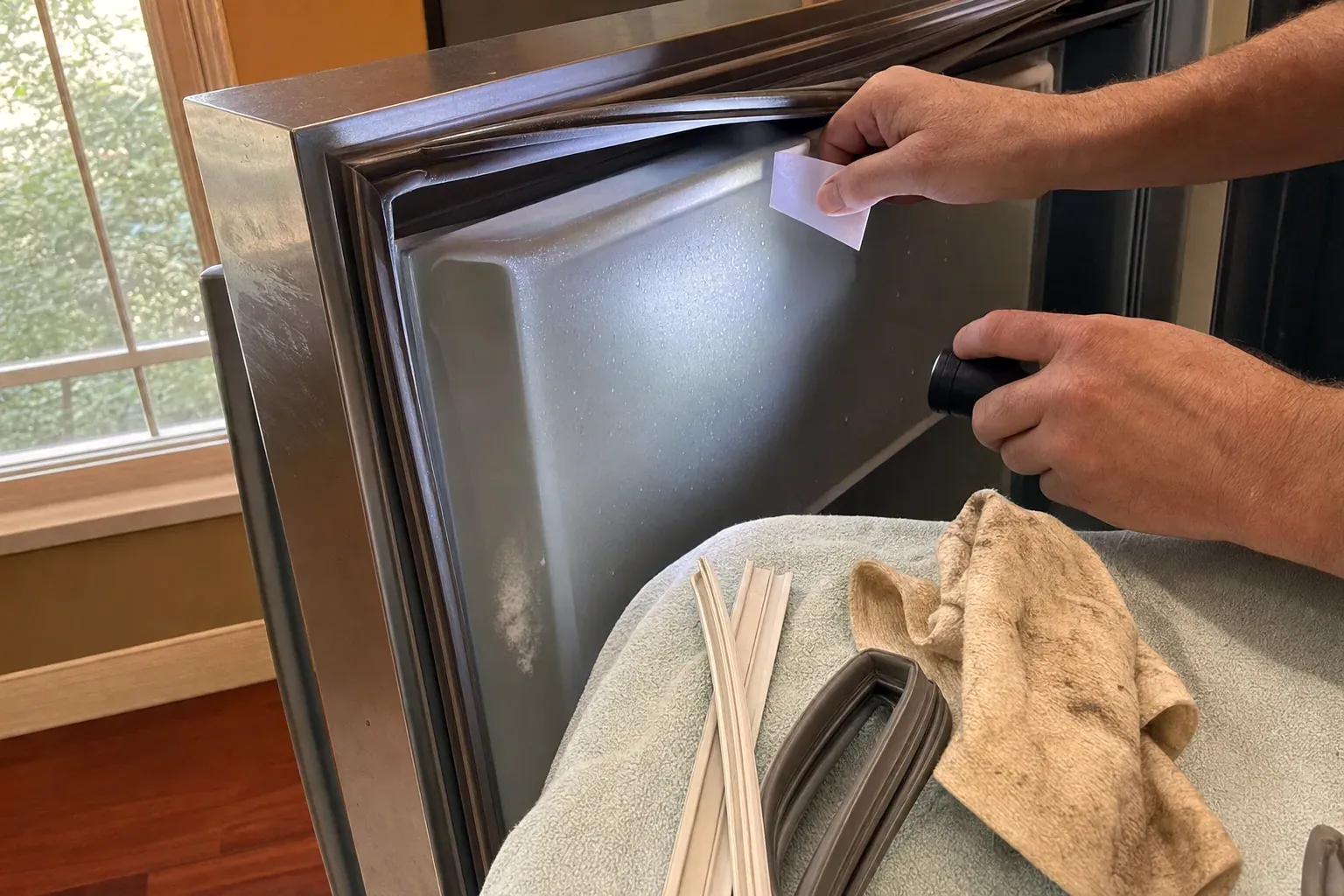
Nobody asks this question about a machine that is working. It comes up with a diagnosis already in hand and a decision to make, usually under time pressure. The useful version of the question is narrower than repair or replace: it is whether this particular part, on this particular machine, at this particular age, is worth the money. Three things settle it.
The question is about the part, not the appliance
A refrigerator is not one machine. It is a cabinet, a sealed refrigeration circuit, a control system and a set of moving parts, and none of them fail at the same rate or cost the same to put right.
Asking whether a ten-year-old refrigerator is worth repairing has no answer. Asking whether a ten-year-old refrigerator with a failed evaporator fan is worth repairing has an obvious one: yes, because the fan is a stock part, the labour is short, and nothing else about the machine has changed.
So the first thing to establish is what actually failed. A diagnosis of "it is not cooling" is not a diagnosis. Ask which component, and ask why it failed, because a part that failed from neglect says something different from one that failed from wear.
Where your machine sits in its service life
Service life is the number that makes the rest of the decision reasonable. The figures commonly quoted are roughly ten to fifteen years for a refrigerator, nine or ten for a dishwasher, ten to twelve for a washing machine, a little longer for a dryer, and under ten for a microwave. Built-in and professional-grade equipment tends to run longer, partly because it is built heavier and partly because it tends to be maintained.
Halfway through that span, most faults are worth fixing. Past the top of it, the machine is likely to present a second, unrelated fault within a year or two, and each repair buys less time than the one before it.
That pattern, more than any single quote, is what should drive the decision.
Faults worth fixing on almost any machine
Some parts are designed to be replaced. Door seals and gaskets, water inlet valves, drain pumps, thermostats and thermistors, ice maker modules, evaporator and condenser fan motors, door switches, hinges, igniters, heating elements and drive belts are all consumables in the sense that matters here: individually replaceable, short labour, and replacing one tells you nothing bad about the condition of the rest of the machine.
If a technician names one of these and the appliance is not already limping in other ways, repair is almost always the better outcome.
The same is true of anything caused by neglect rather than wear, such as a condenser coil packed with dust or a drain line that has blocked. Those are maintenance faults wearing a failure costume.
Faults that usually end a machine
A short list does most of the damage.
On refrigeration, a failed compressor or a leak in the sealed system. The parts are expensive, the labour is long, and a system that has run low on refrigerant has often run its compressor to death as well.
On washing machines, outer-drum bearings, because on most modern designs the drum is sealed and the whole assembly is the part rather than the bearings themselves.
On anything, a main control board on a machine near the end of its life, and a cracked or corroded cabinet or tub.
None of these are impossible to repair. They are simply the point at which the arithmetic usually tips, and a technician worth having will say so rather than quoting it and leaving you to work it out.
The rule of thumb, and where it misleads
The rule most people have heard is that if a repair costs more than about half of a comparable new machine, replace it. It is a reasonable starting point, and it is wrong often enough to be worth qualifying.
It misleads on built-in equipment, where the replacement is not just the appliance but the cabinetry, the panel and sometimes the surrounding worktop.
It misleads on high-end machines that are still young, where half of the replacement figure is a very large repair budget and the machine has a decade left in it.
And it misleads the other way on cheap appliances near the end of their life, where a repair well under half the replacement figure still is not worth doing. Use the age and the part first, and the ratio as a sanity check.
Built-in and panel-ready equipment changes the maths
A freestanding machine can be swapped in an afternoon. A built-in refrigerator, a wall oven or an integrated dishwasher cannot, and replacing one drags in work that has nothing to do with appliances.
Cut-out dimensions have shifted over the years, so a current model may not drop into an older opening without cabinetry work. Custom panels and handles are usually specific to the machine they were made for. Integrated units are often plumbed and wired on the assumption that they will not move again.
Because of that, built-in equipment is worth repairing further into its life than a freestanding equivalent, and it is entirely normal for repair to remain the sensible choice on a unit that would already have been replaced if it were a standalone machine.
Parts availability, and the age cliff
Manufacturers generally keep functional parts available for several years after a model is discontinued, and in practice most keep the common ones for longer than that. Boards and cosmetic parts run out first. Motors, pumps and seals last longest, because they are shared across model ranges rather than tied to one machine.
This matters more than it used to. A machine whose fault is a discontinued control board is not repairable at all, and no amount of arithmetic changes that.
Aftermarket and rebuilt boards do exist, and on an otherwise sound machine they are a reasonable option, but they are a different proposition from a new part. Before agreeing to a repair on anything older than about ten years, ask whether the part is still available new.
What a good diagnosis looks like
You should come away from a visit knowing three things: which component failed, why it failed, and what else on the machine is showing its age. The third is the one that gets skipped, and it is the one that decides most of these questions.
A machine with one failed part and a clean bill on everything else is a repair. A machine with a failed part, a tired seal, a noisy fan and rust at the tub is telling you something, and fixing the first item on that list will not stop the rest arriving.
If the only answer you get is a figure, ask what failed and why. It is a fair question, and the answer usually changes the decision one way or the other.
What you can check yourself
- Find the model and serial plate, usually inside the door frame or behind the kick panel, and photograph the whole plate.
- Write down the exact symptom and any fault code before the visit, including what the machine was doing when it started.
- Check whether the appliance is still inside a manufacturer or extended warranty before booking any independent repair.
- Ask which component failed and why, not only what the repair will cost.
- Ask whether that part is still available new for your model.
- Rule out the cheap causes first: a blocked coil, a clogged filter, a tripped breaker, a door that no longer seals.
- For a built-in unit, measure the cut-out opening before assuming a current model will fit it.
Questions
- Is there an age at which an appliance is automatically not worth repairing?
- No, although past the top of its usual service life a second unrelated fault within a year or two becomes likely. Age is a weighting rather than a rule. A consumable part on a fifteen-year-old machine in otherwise sound condition is still usually worth replacing.
- How do I find out how old my appliance is?
- The serial number encodes it on most makes. The plate is usually inside the door frame, behind the kick panel or on the rear. Photograph the whole plate rather than copying the number out. A technician can decode it, and so can the manufacturer support line.
- Does a repair extend the life of the rest of the machine?
- No. Replacing one part restores that part and nothing else. This is why a diagnosis should include the condition of everything around it, because a machine with several parts near the end of their lives will keep presenting faults regardless of which one is fixed first.
- Are extended warranties worth taking on a new appliance?
- That is a personal judgement, and it turns on the machine and the terms you were sold. The practical point is narrower: while manufacturer cover is still live, the claim has to go through the maker’s own service channel rather than an independent company, so read the paperwork before you book anyone at all.
- Should I repair a machine I plan to replace within a year anyway?
- Often yes, if the part is inexpensive and the labour short, because replacing an appliance under pressure limits the choice badly. If the fault is a compressor, a sealed system or drum bearings, bring the replacement forward instead of paying twice.